.svg "Terso Solution Logo")

USE CASE - MEDICATION MANAGEMENT
Know Exactly What You Have
At every location. At every moment. Terso's RAIN RFID medication management platform gives hospitals, health systems, and pharmacies real-time inventory visibility — reducing waste, deterring diversion, and keeping you audit-ready without adding headcount.
Medication Management
The Problem
Most medication management programs have a visibility problem. Manual counts are snapshots in time. Spreadsheets go stale the moment they're saved. Badge-only access logs tell you who entered a room — not what left the shelf. The result is inventory that surprises you: stock-outs when you can't afford them, expired medications quietly draining your budget, and gaps in accountability that create both patient safety and compliance risk. One misplaced high-cost drug, stored in the wrong location and forgotten, can expire unnoticed — representing more than a million dollars discarded.
Real-time visibility changes everything downstream.
When you know exactly what's in stock — by item, by location, by expiration date — every other challenge becomes easier to manage. Waste drops because you can rotate inventory intelligently and move products to high-use areas before they expire. Diversion becomes harder to conceal because every removal is automatically attributed and logged. Audits stop being stressful because your records are always current.
Terso's RAIN RFID ecosystem automatically reads every tagged item in an enclosure the moment the door closes, pushing a timestamped, user-attributed inventory record to your platform via Jetstream — with zero manual intervention required from your team.
Automated. Everywhere. Accurate.
Item-level inventory, in real time
RFID reads every tagged medication on door-close. Stock levels, locations, and expiration dates are updated instantly and pushed to your inventory platform via Jetstream.
Controlled entry, every time
User-specific credentials authenticate every access event. Removals are automatically attributed to a named user — creating accountability without manual sign-out processes.
Complete chain of custody
Every transaction is permanently recorded — what was accessed, what was removed, who did it, and when. DEA and Joint Commission-ready reporting, available on demand.
Real outcomes at real health systems.
Terso RFID cabinets and refrigerators are deployed as the secure storage backbone in some of healthcare's most advanced medication management programs.
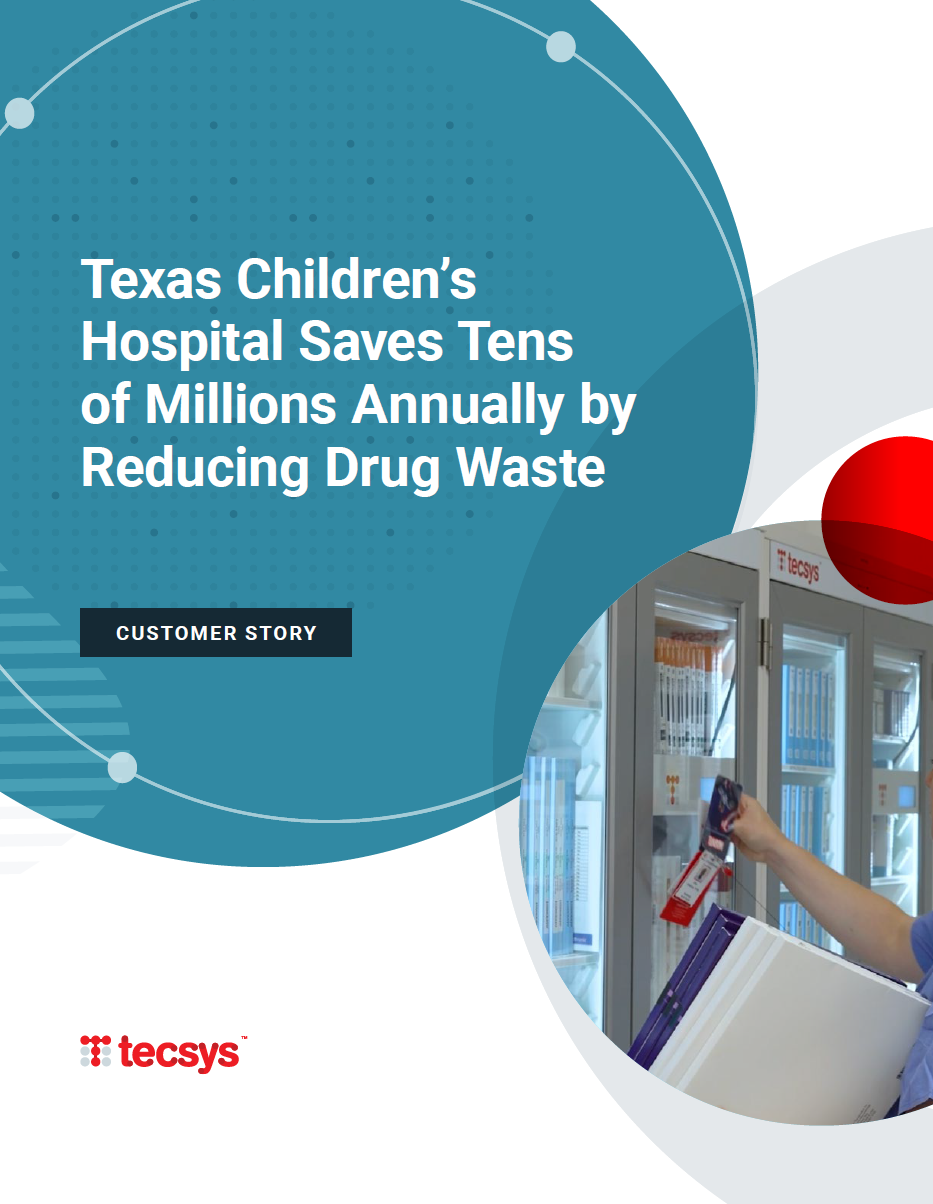
One of the largest pediatric hospitals in the U.S. was losing up to $40 million annually from expired and mismanaged drugs across a $400 million medication budget. After deploying an RFID-enabled pharmacy inventory system built on Terso RFID cabinets and refrigerators, the pharmacy reduced its inventory workflow from 12 manual steps to two — and saved $14 million annually on high-cost medications despite using 30% more of them.
The result reframed pharmacy from a cost center to a margin driver — with real-time visibility into every drug's location, value, and expiration status, available to staff on desktop and mobile, around the clock.
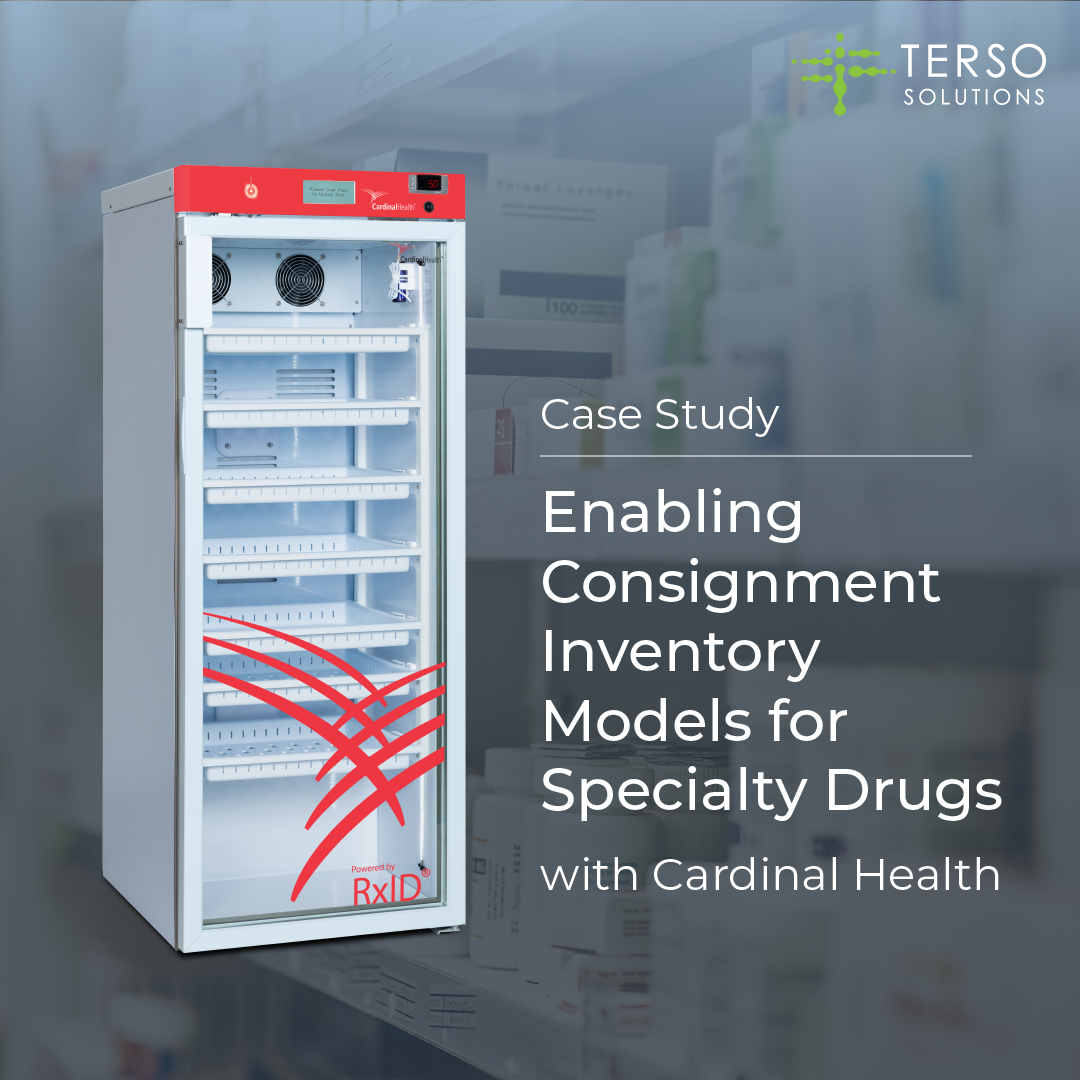
Cardinal Health's specialty drug consignment program relies on Terso RFID-enabled refrigerators to automate inventory management for high-cost specialty medications. The integration supports automatic reordering, expiration tracking, and a bill-upon-use model that reduces carrying costs — while giving pharmacy leaders real-time visibility across multiple sites of care. As Terso's Jason Rosemurgy noted, delayed or inaccurate inventory information can result in losses of extraordinary scale: one pharmacy experienced a $30 million write-off after failing to verify whether medications had been stored within required temperature thresholds.
Purpose-built for the pharmacy environment.
TersoSecure RFID Cabinets
Room-temperature medication storage with item-level RFID tracking and secure, credentialed access. Ideal for floor stock, controlled substances, and formulary management.
RFID Refrigerators & Freezers
Temperature-controlled enclosures for cold-chain medications, biologics, and specialty drugs — with continuous monitoring from -86°C to ambient. Visibility and cold-chain integrity in one.
TersoFlex Read Points
Flexible RFID infrastructure — wall, table, or ceiling mounted — that extends real-time visibility beyond fixed enclosures to any area of your facility where medications are stored or administered.